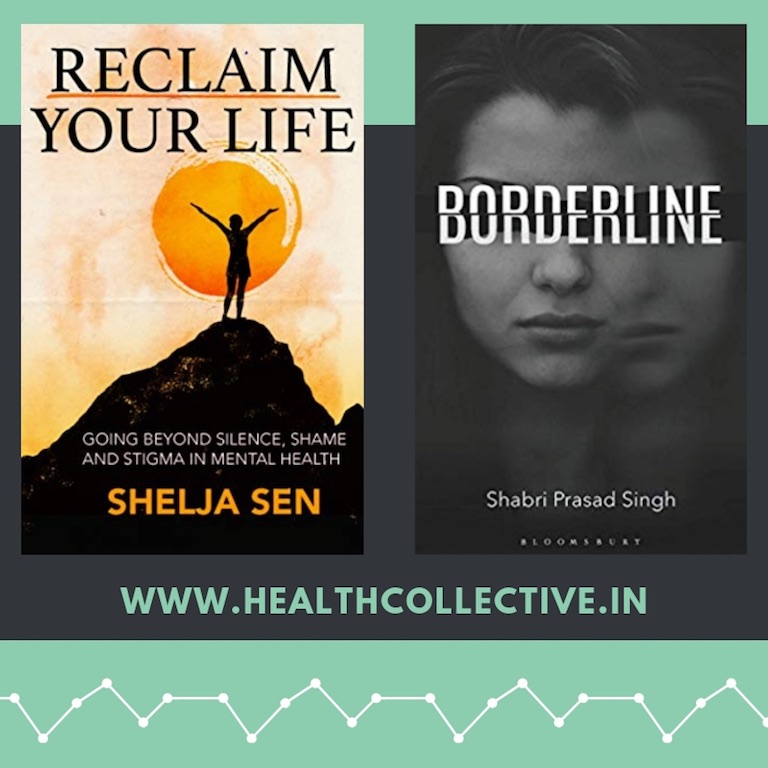
This year, the Gurgaon Literature Festival will be focusing on Mental Health and Illness. Festival director Shabri Prasad Singh, who has written a book called Borderline, based on Borderline Personality Disorder shares some of her thoughts in our email Q&A with The Health Collective‘s Amrita Tripathi. This interview has been lightly edited for clarity.
I was searching for a theme and I wanted it to be something each human being needs. I was on Twitter when I announced my joining as a festival director for GLF. It so happened that Dr Samir Parikh (had) suggested we have some mental health sessions. As that thought simmered in my mind, I thought why not make the whole festival an ode to mental health. As a society, as a citizen of our lovely country, I do hope GLF can help destigmatise mental health issues. The festival dates are 16th and 17th November and the venue is DLF CyberHub.
We also thought to culminate the festival (with a celebration)…We have an Artist’s Ball for our guests and speakers. I believe in the principle that nothing is permanent, there is no such thing as normal and as long as we have this life let us bask in knowledge.
2. Why do you think it’s important to talk about mental health and illness in India?
India is one of the most depressed countries in the world. We have so many issues as a developing nation. We are yet to become an open-minded society when it comes to mental health issues. Whether it is teenagers or women or men, each and everyone of us face some challenge or the other once in our lifetime of mental illness.
To eradicate some of the stigma I made Gurgaon Literature Festival’s theme mental health. It is easy to go behind closed doors and seek help from a mental health professional, but it’s not easy sometimes to accept our illnesses in society. That same society which will ask us ‘what’s wrong with you? Why are you so angry, morose, lonesome?’
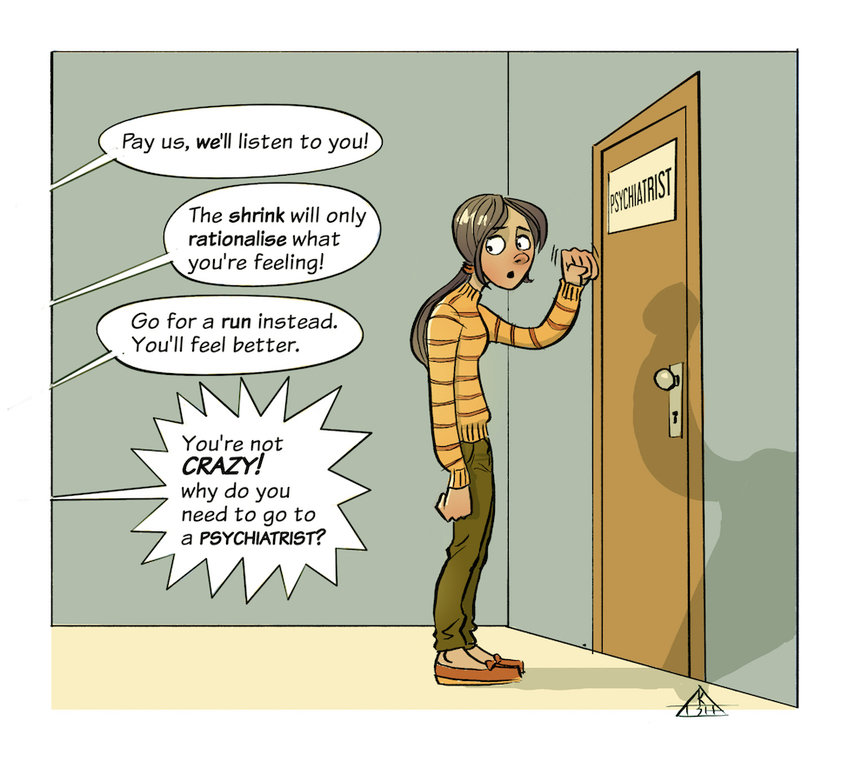
Art by Kishore Mohan for The Health Collective
To answer what is really going on, one must first accept that yes there is something wrong. Like any other organ in the body the brain can get Ill too. We must open the dialogue for parents for spouses and for patients. That’s why most of our panel debates our on mental health issues.
3. What are 3 things you want everyone to know about Mental Illness…and do you have any stories you’d like to share? Since your book has come out, and especially since you have been so open in sharing your story, have others also reached out to you?
The three things I want everyone to know about mental illness are:
1. It’s ok to not be ok. We can fall prey to demons of the mind, but with care and maybe medication we can come out of it.
2. It is ok to see a psychiatrist and get help. People often say, “No we dont want to see a psychiatrist we will be stuck forever, we will get addicted to the medication.” However like my father says when my medication tends to make me gain weight: ‘It is better to be overweight than to be psychotic’.
3. Since my book came out a lot of people have reached out to me and opened up about their sufferings. I also give free therapy. I’ve come across many people going through the same things I went through. I give them objective information and ask them to see a therapist.
The Health Collective is not in the business of nor intends to provide counselling service. The professionals, the website of the professionals and helpline numbers listed on the The Health Collective are not employed, associated or endorsed by The Health Collective. The professionals and the organisations behind the listed websites and helpline numbers, on The Health Collective website, are independent third parties and there is no relationship of principal-agent, employer-employee, partnership of any nature with The Health Collective. The Health Collective does not make any recommendation or guarantee service or quality of any professional or helpline number or website listed herein. The Health Collective does not make any representations, warranties or guarantees as to, and is in no manner responsible for, the services provided by the professionals or their websites or the helpline services. The stories and comics set out by The Health Collective are intended purely for reference purposes. Advice or stories set out herein are by no means intended to malign or defame any person, organisation, caste or community. Advice or stories set out herein are views of the concerned author only, The Health Collective does not claim copyright or endorse or recommend or represent on veracity of the advice contained in the articles or stories (including the comics) on this website. Additionally, the articles and stories set out herein should not in any manner be considered as substitute for professional help. All experiences are personal, hence advice and suggestions contained in the articles and stories may not apply to a reader’s specific facts or situations, and it is recommended that professional help is sought for such matters. The Health Collective disclaims all liability of all nature arising out of reliance placed on the advice set out in the articles and stories or arising out of meetings with professionals or calls with the professionals or helpline numbers mentioned on the website of The Health Collective.